RESEARCH
|
Environmental Racisim & Adaptation in Eastern Gray Squirrels
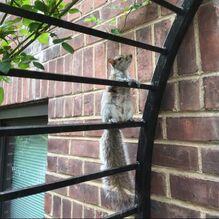
Environmental Racism is the practice by which environmental policy making deliberately targets communities of color, thereby exposing these communities to higher levels of toxins and pollutants. These environmental policies have profound effects on the people, wildlife, and landscape in these communities. I am investigating the impacts of environmental racism on Eastern Gray Squirrels in St. Louis, Missouri, a city with a long history of segregation and environmental racism. I am also investigating how squirrels are adapting to the urban environment within St. Louis city. If you are interested in helping collect roadkill specimens for this project, click here.
|
|
|
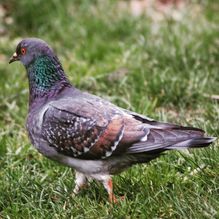
Evolution of Feral PigeonsI am currently using pigeons as a model to understand gene flow, genetic drift, adaptation, and the contribution of fancy and racing pigeons to feral populations in the Northeast Megacity (Boston, MA to Washington, DC). A portion of this work has been published in Evolutionary Applications.
|
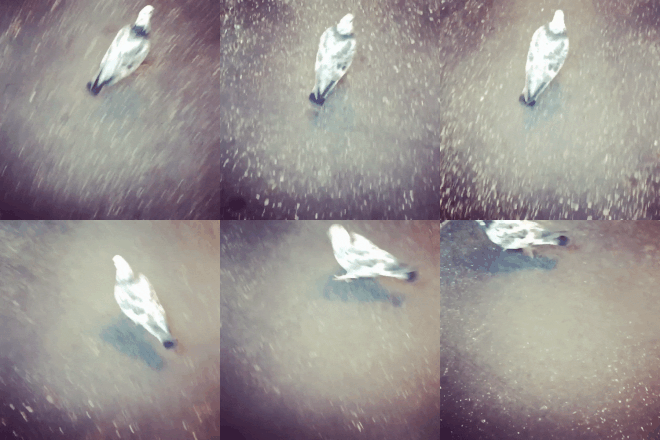
FID in Urban AnimalsFlight Initiation Distance (FID) is a common measure of the willingness of an animal to take risks and should increase as predation risk decreases and decrease as escape costs increase. My work on FID in urban pigeons and squirrels has been published in Animal Behaviour and the Urban Naturalist, respectively.
|
|
© Sean Edgerton
|
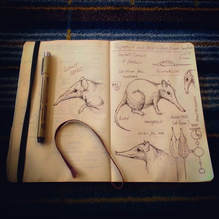
Phylogenetics of Elephant-ShrewsFor my Masters research, at San Francisco State University in conjunction with the California Academy of Science, I assembled the first molecular phylogeny of giant sengis (also known as elephant-shrews). Giant sengis are small-bodied mammals that range from central through eastern Africa. This work has been published in Molecular Phylogenetics & Evolution. Additionally, I worked on classifying and naming the replacement genus for the North African sengi, Petrosaltator.
|
header photograph ©Vincent Tullo